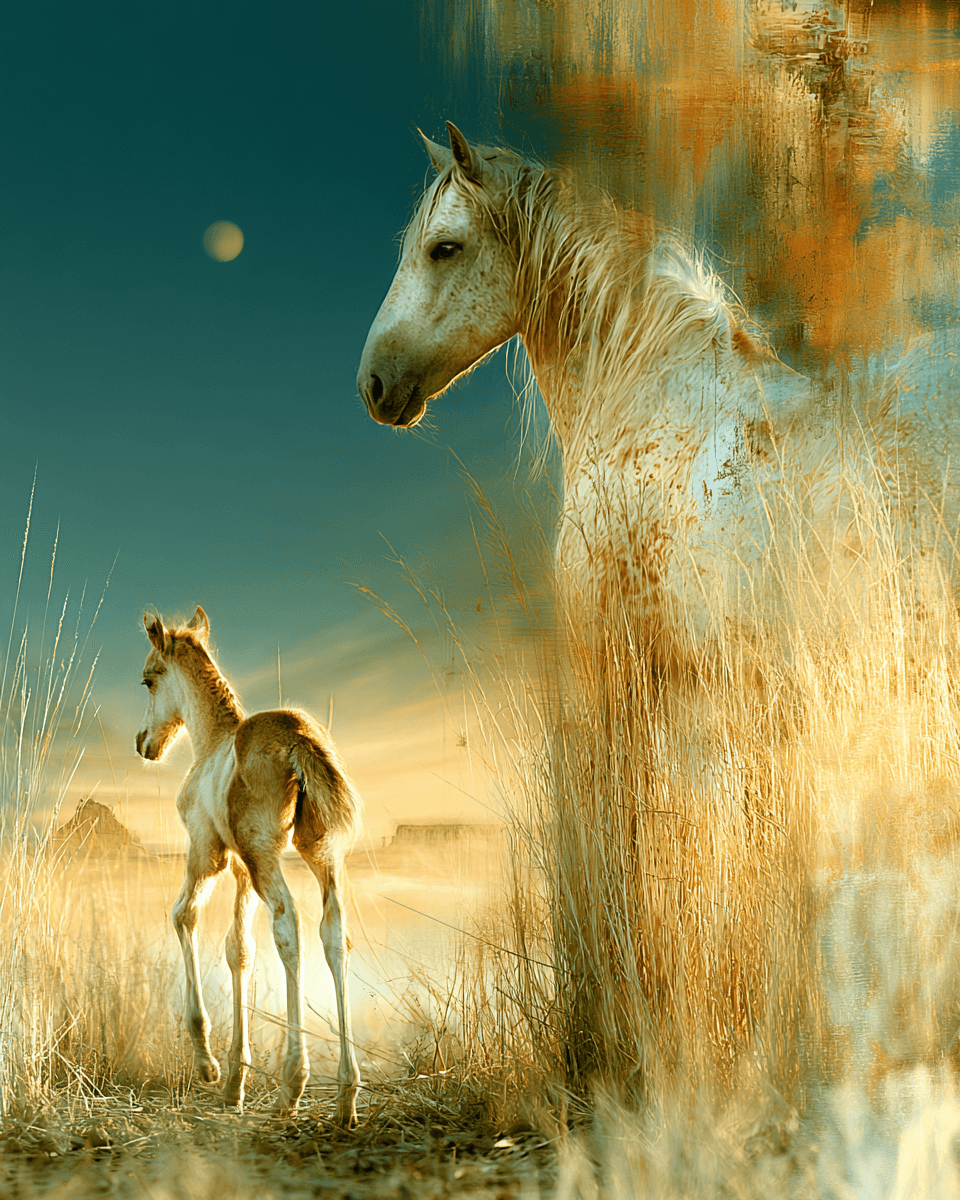
She Began Walking
Movement establishes vulnerability, distance, and the beginning of the journey.
Scenes, characters, and storyworlds developed for authors and creators who need to see part of the story more clearly.
Some projects begin with a character. Others begin with a place, an emotional moment, or a story that has been unfinished for years. These examples show how visual direction develops from what the creator already knows.
The work begins with the story — not with a style.
A story of memory and belonging in the Nevada high desert.
This storyworld began with a white foal and one emotional question: what does belonging look like before you know you belong? The visual development grew from there into setting, atmosphere, recurring characters, emotional distance, and a consistent visual language.
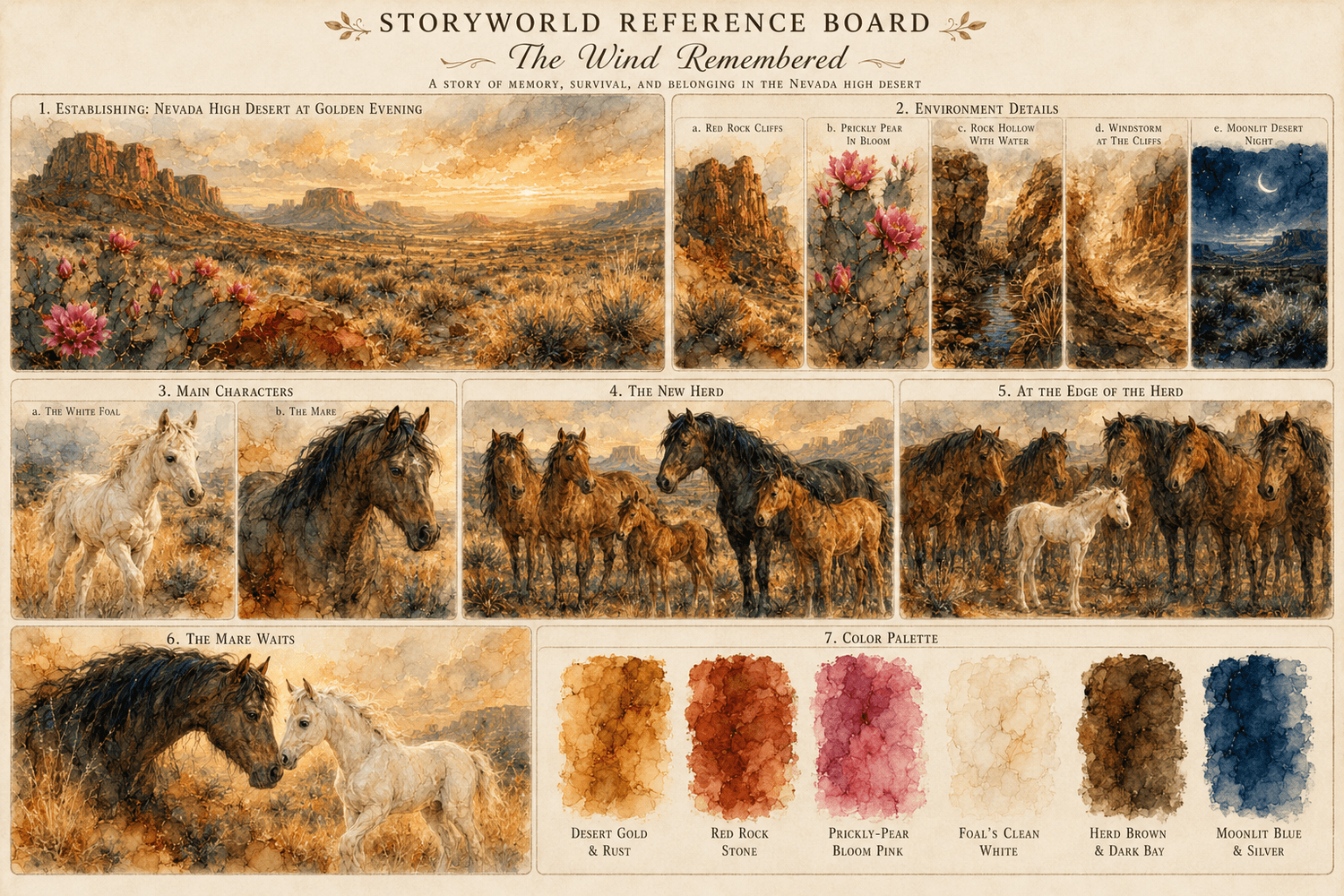
Movement establishes vulnerability, distance, and the beginning of the journey.
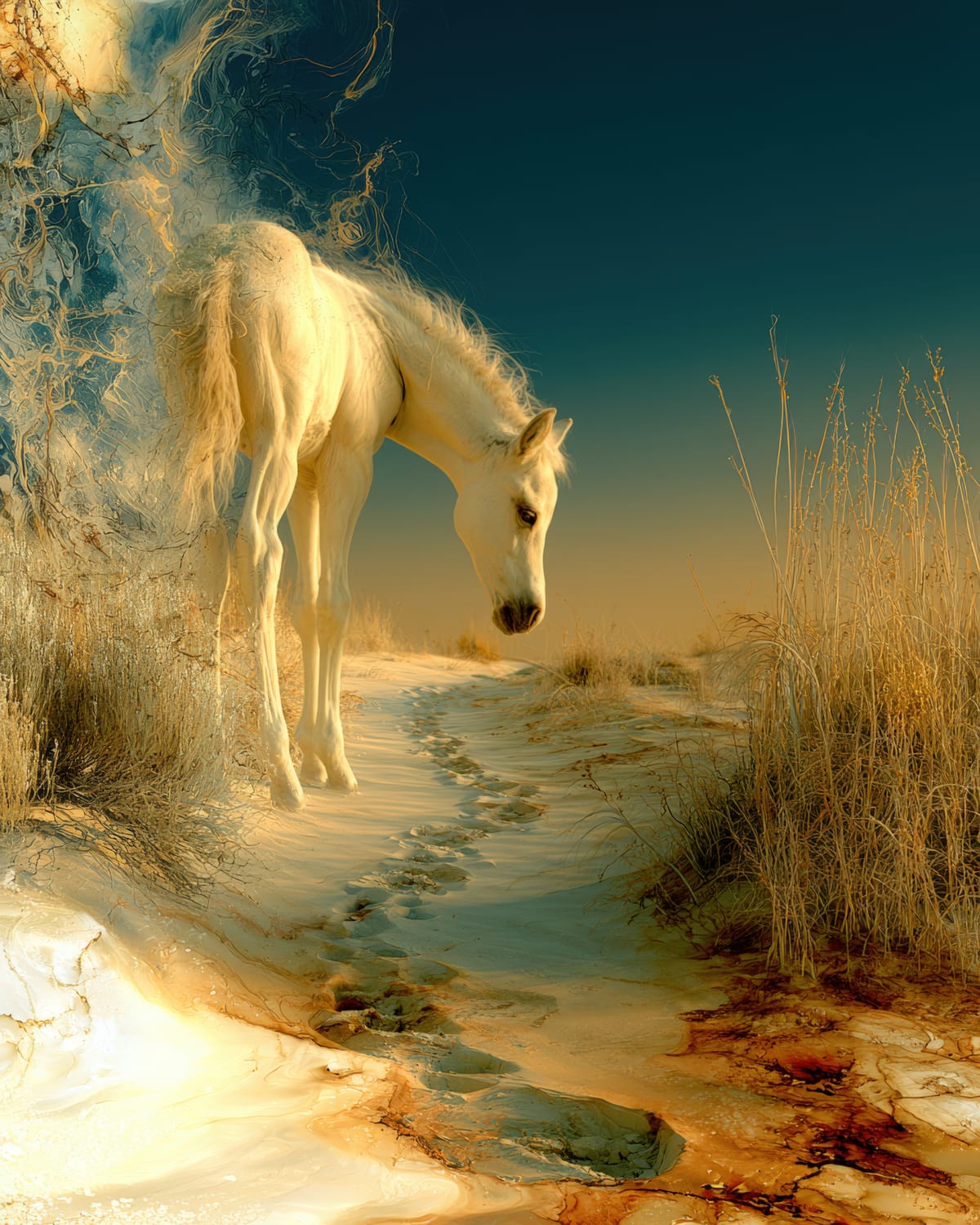
A visual clue gives the journey direction and introduces the possibility of connection.

Recognition changes the emotional direction of the story from searching toward remembered safety.
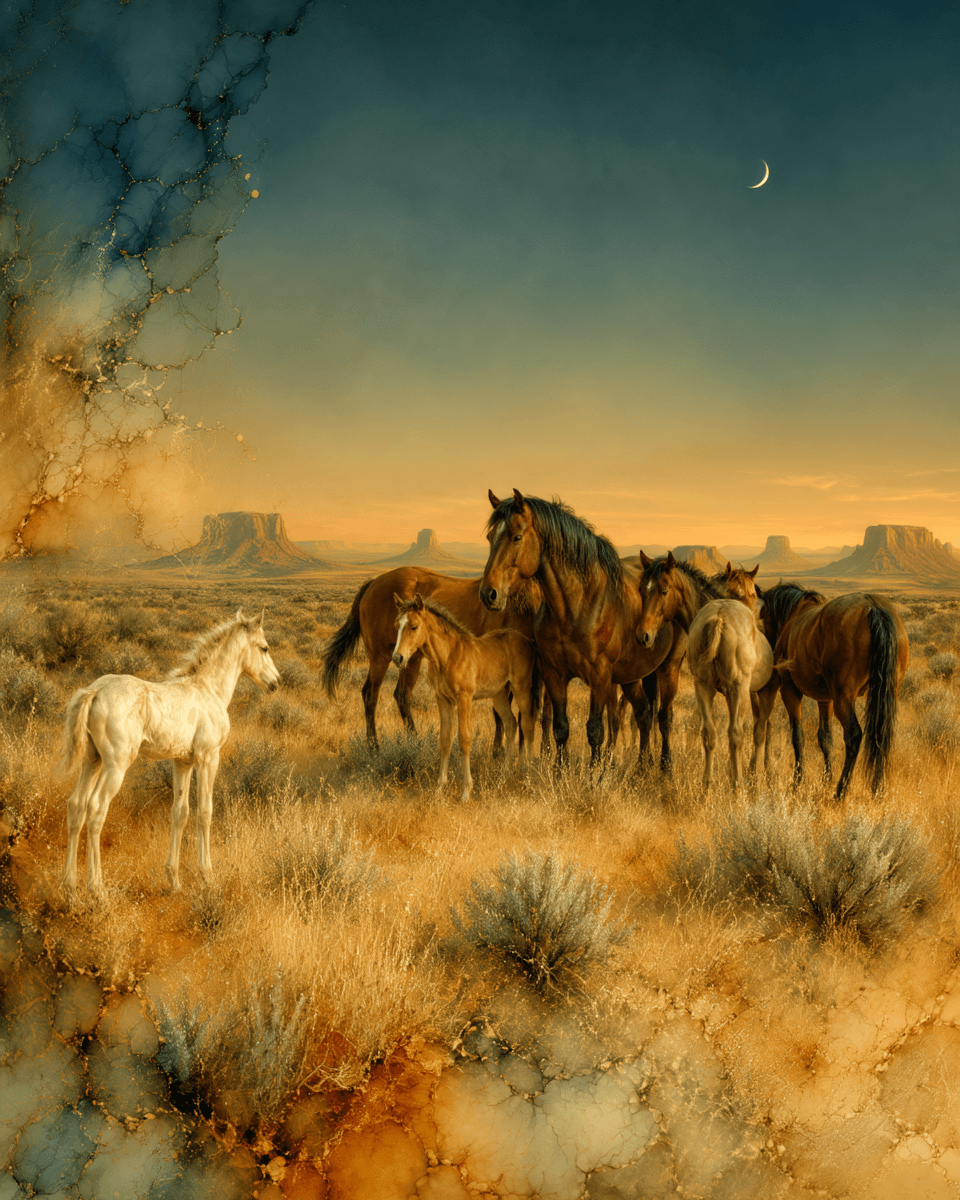
The landscape, herd, and spacing between characters make belonging visible before it is spoken.
Character development is not only about choosing a face. It can include posture, expression, clothing, scale, recurring objects, emotional tone, and the details that need to stay consistent from one scene to the next.
Different stories need different kinds of character evidence.
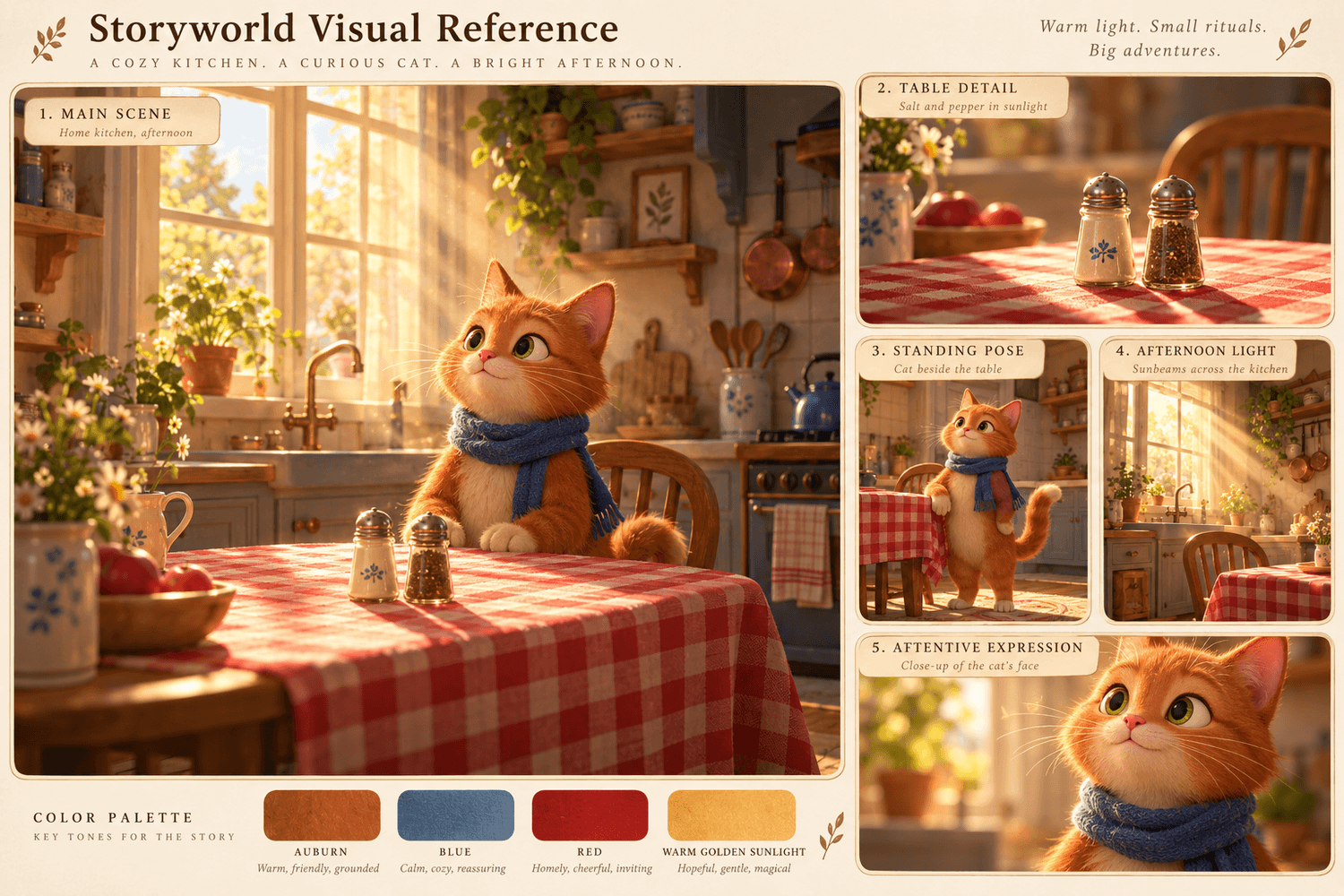
A warm, attentive cat developed inside a cozy kitchen world so the character could carry an emotionally meaningful theme without making the visual experience feel heavy.
Visual focus: expression, posture, scarf continuity, environment, warm light, and approachable emotional tone.
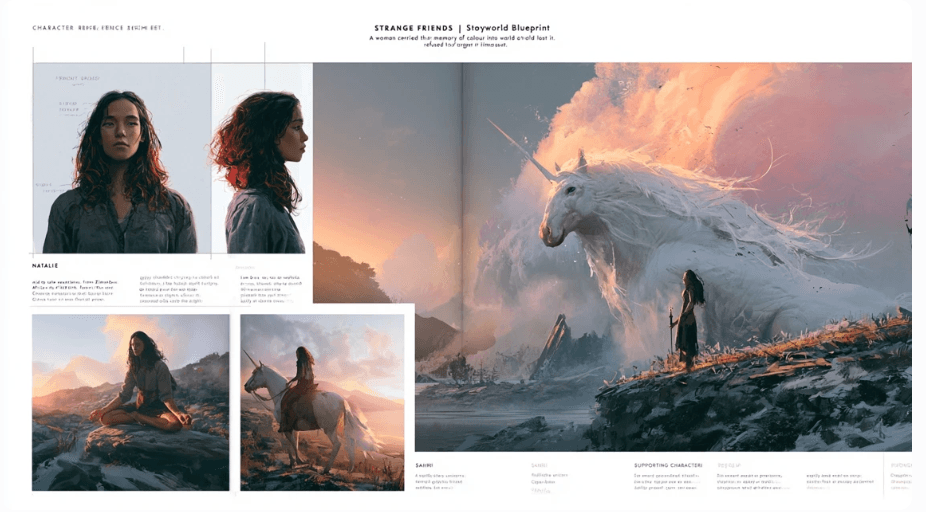
Natalie was developed for a manuscript that had been sitting in draft for years. The visual work gave the author something concrete to respond to while preserving her own sense of who the protagonist already was.
Visual focus: age, presence, clothing, facial direction, emotional strength, and relationship to the larger Storyworld.
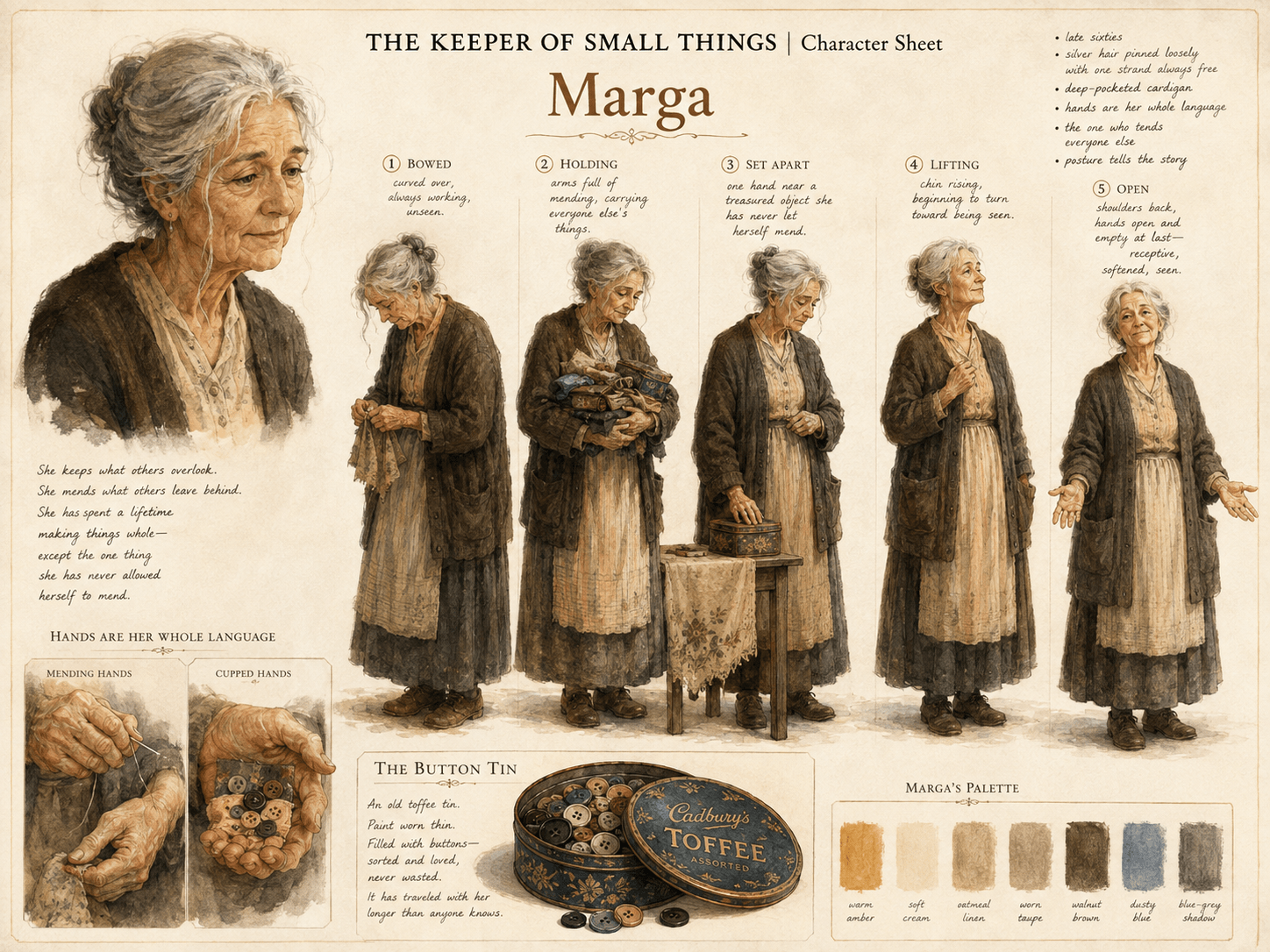
Marga's character is carried through posture, hands, clothing, and a recurring button tin. Her physical openness changes as the emotional arc moves from tending everyone else toward finally being seen herself.
Visual focus: posture arc, hands, silver hair, cardigan, treasured object, age, and emotional progression.
Character consistency is not sameness. It is knowing which details carry the identity of the person from one moment to the next.
Distance, light, point of view, environment, and relationship all change what a moment feels like. Scene development helps identify which visual choices should carry the emotion.
The same story event can feel completely different depending on how it is seen.
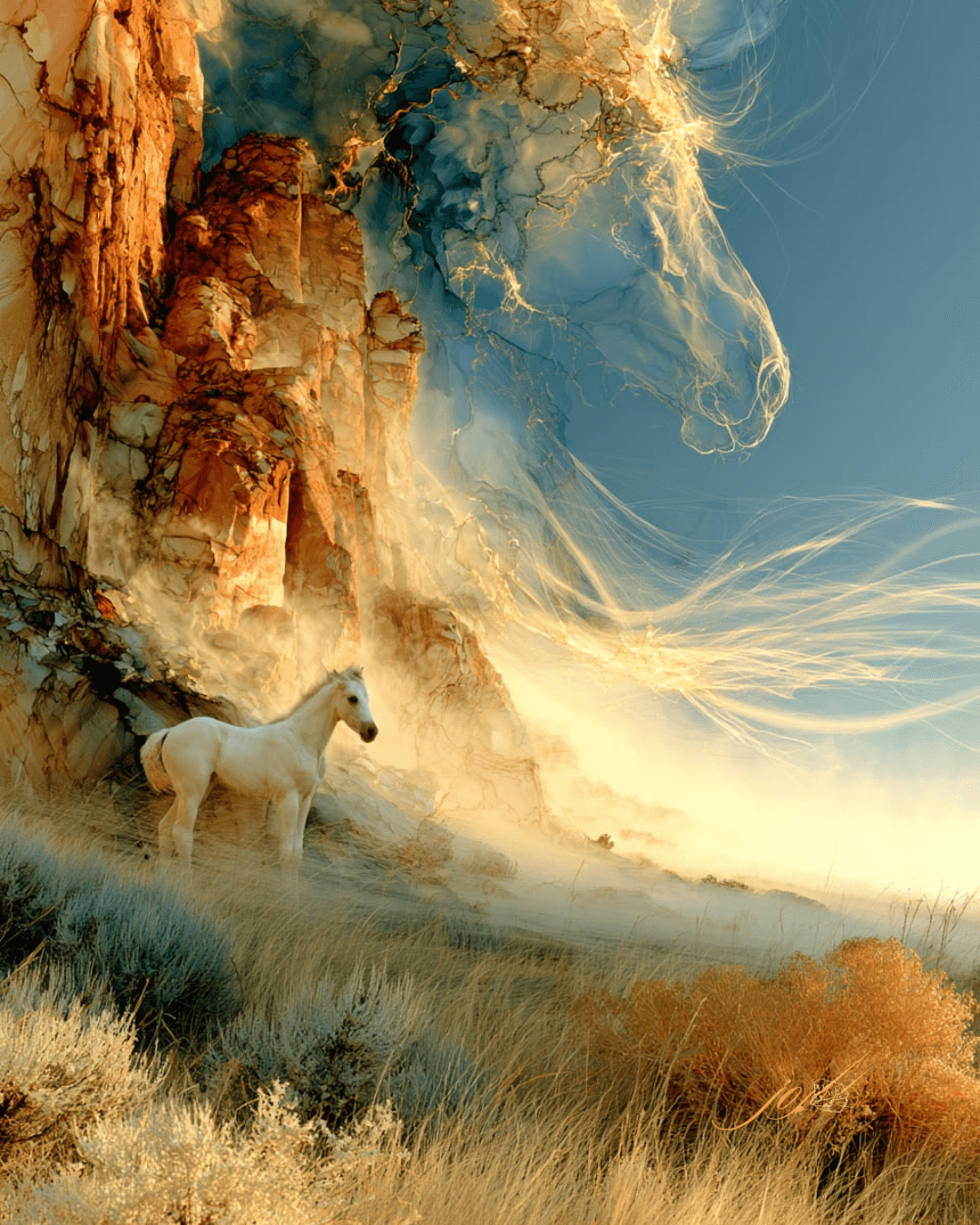
Scale, negative space, light, and symbolic imagery turn an internal feeling into something physically present in the scene. The landscape is not only where the moment happens — it carries memory with it.
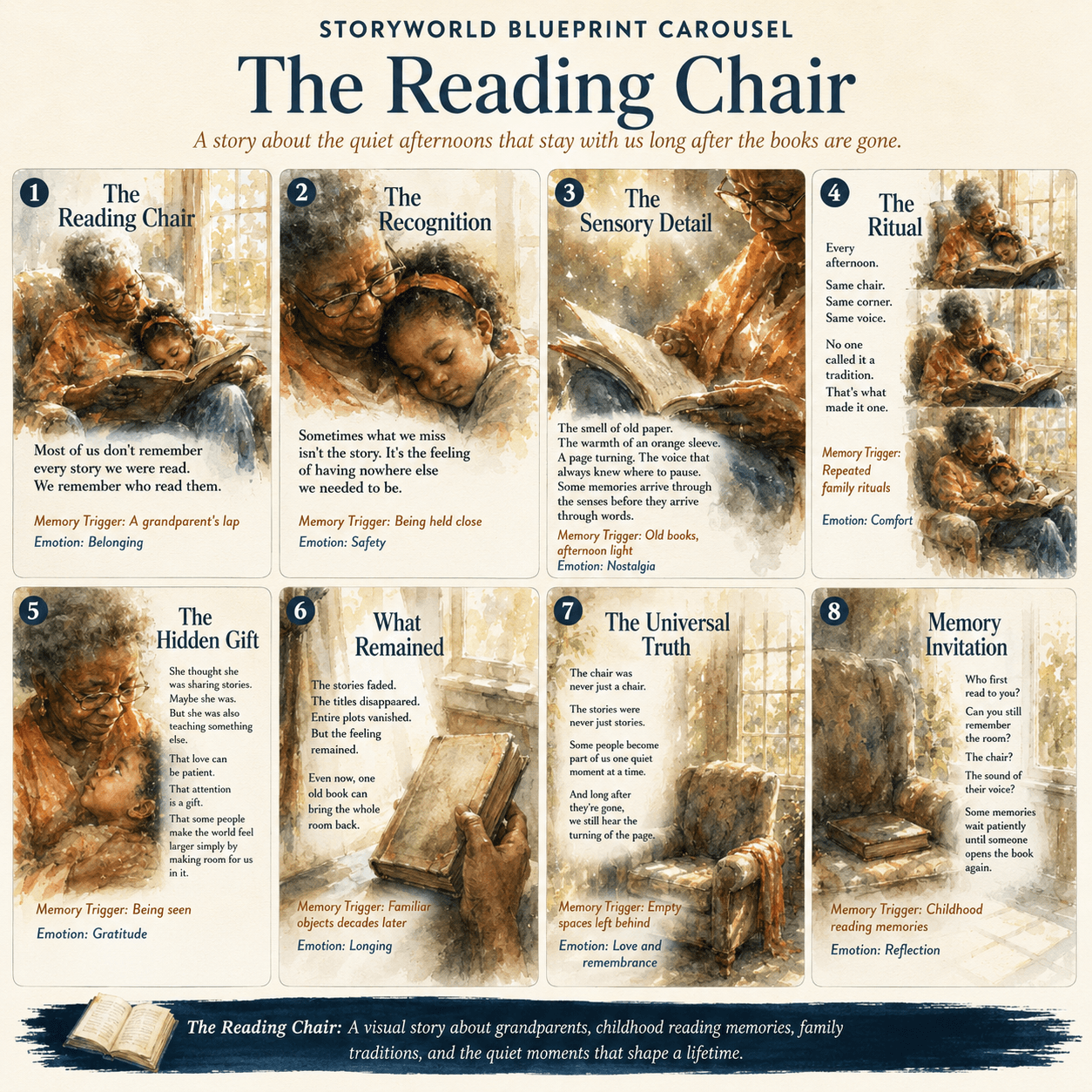
Repeated framing, closeness, familiar objects, and warm afternoon light make the emotional center of the scene feel safe, remembered, and personal.
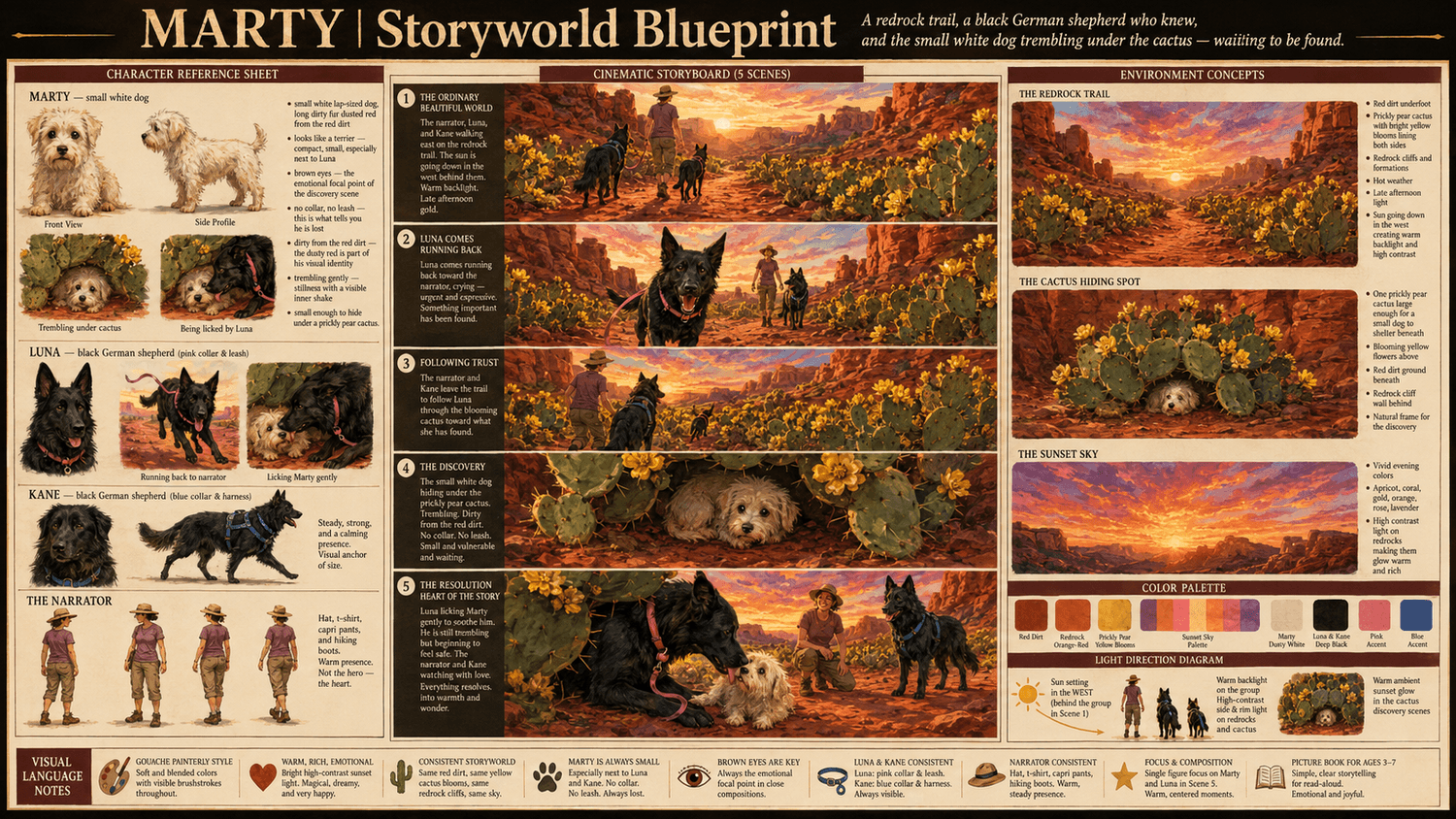
The scene uses movement through the environment, changing distance, and the contrast between large and small characters to build discovery and emotional release.
Not only “What happens here?” but “What should the viewer feel first?” That decision changes the distance, light, composition, body language, environment, and visual emphasis of the scene.
A Storyworld can be playful, realistic, intimate, symbolic, or cinematic. The job is not to make every project look the same. It is to identify the visual language that belongs to that particular story.
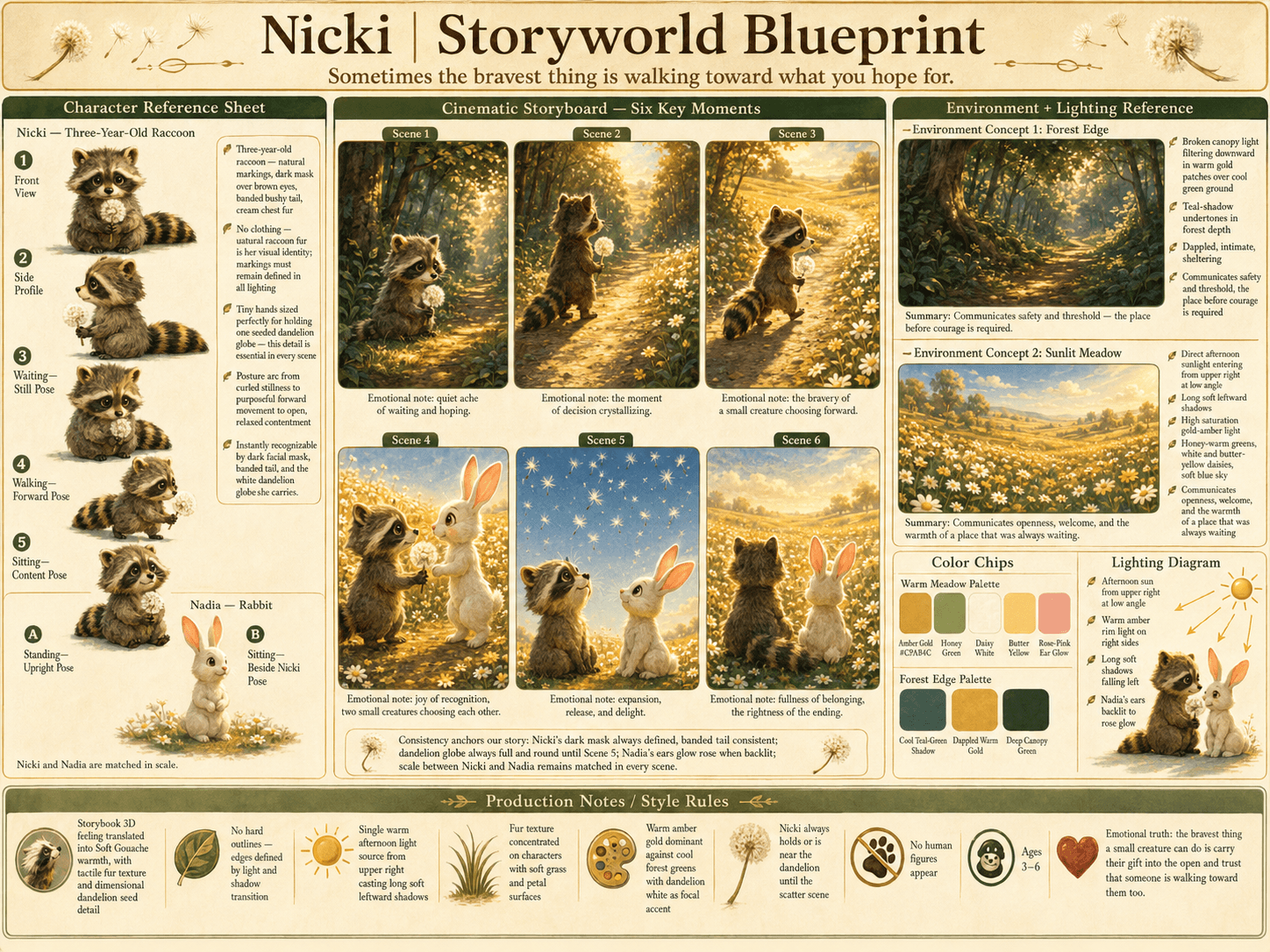
A small raccoon story developed around courage, waiting, movement, recognition, and belonging. The visual system connects character continuity with changing light and environment.
Storyworld focus: scale, pose continuity, dandelion motif, forest-to-meadow transition, lighting, and emotional progression.
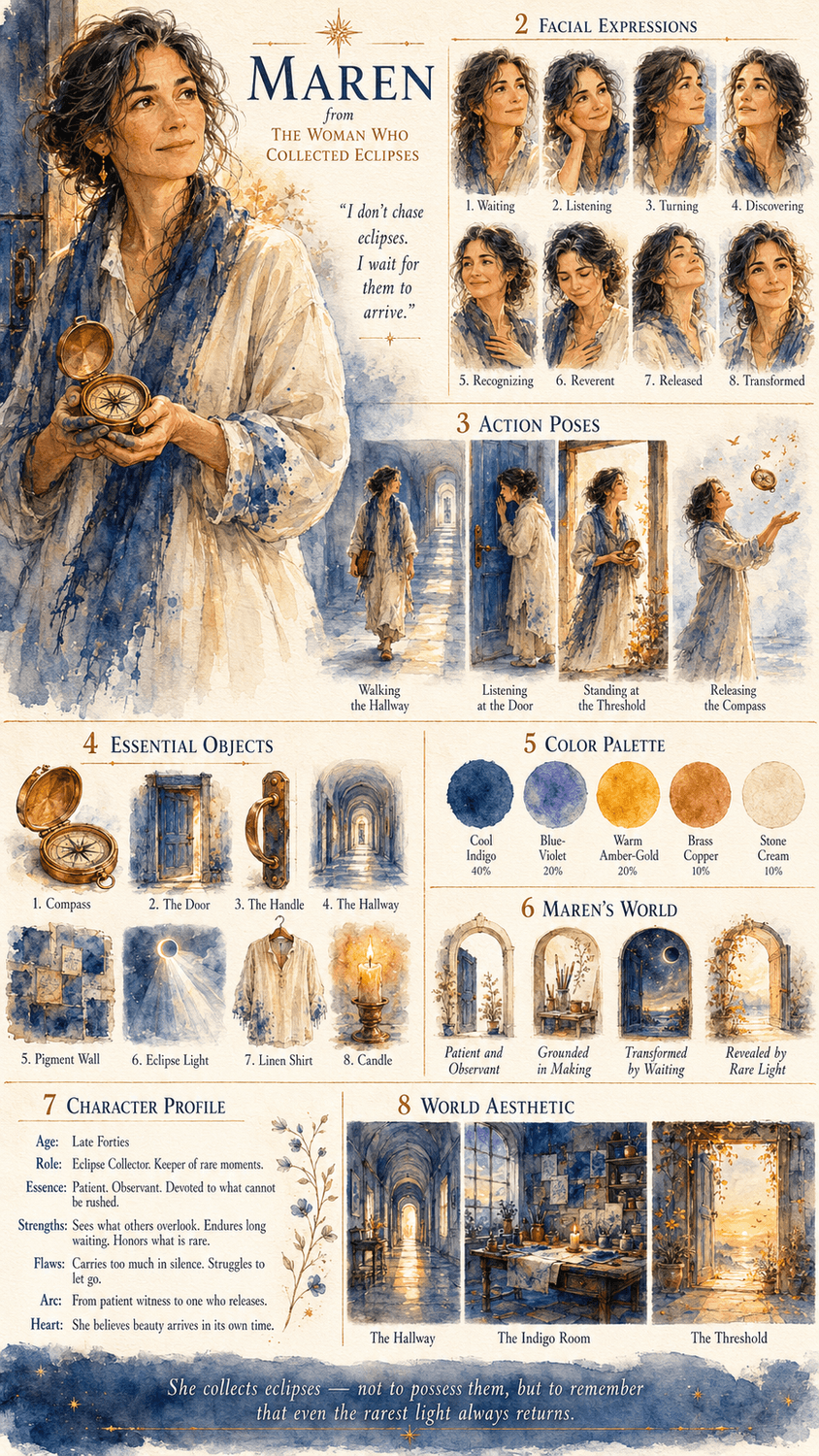
A storyworld built around waiting, rare light, an indigo room, a brass compass, stone thresholds, and a woman whose emotional transformation is reflected in the world surrounding her.
Storyworld focus: symbolic objects, repeating architecture, indigo and amber light, expressions, character movement, thresholds, and transformation.
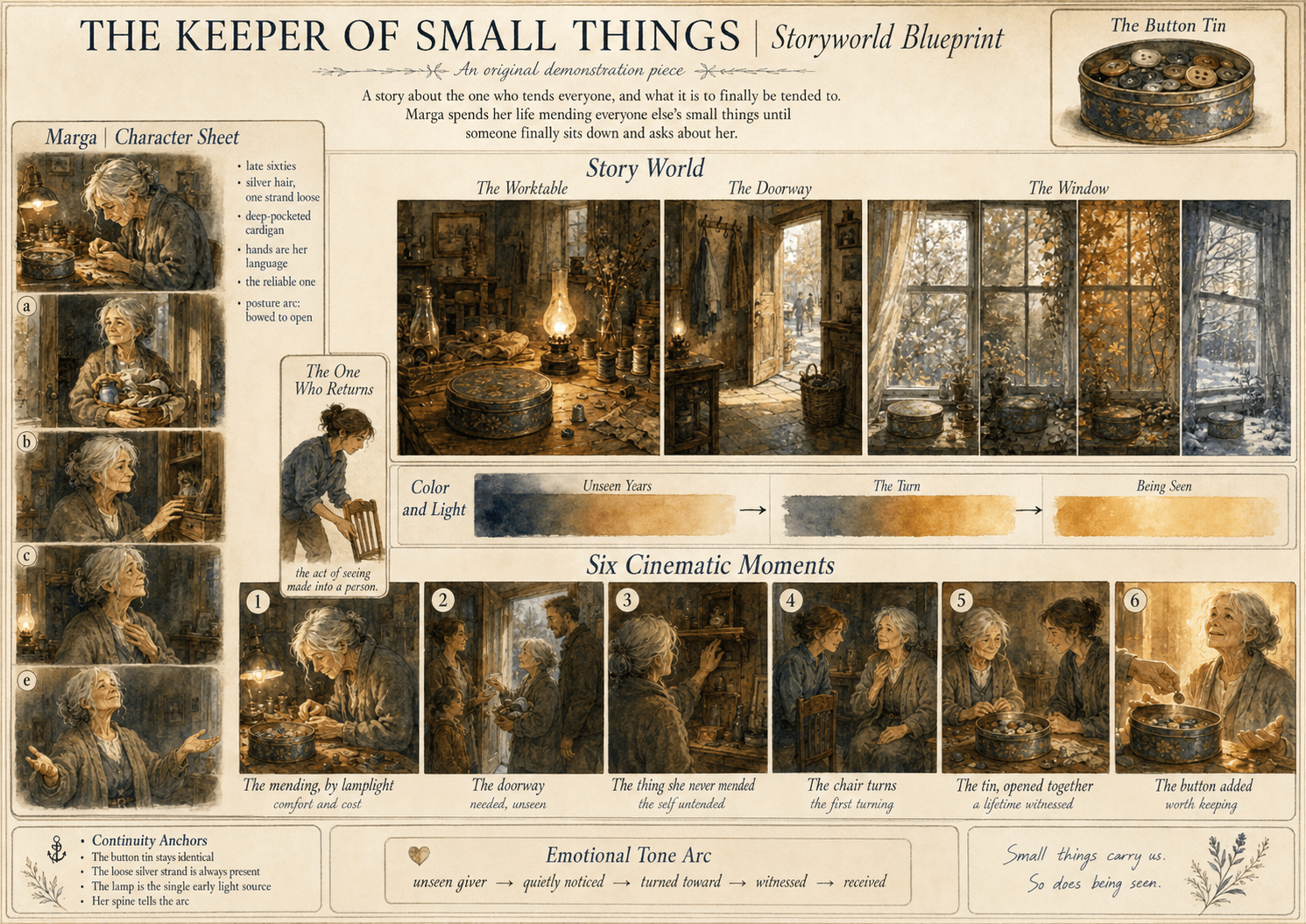
An interior world built around one woman, a worktable, a button tin, changing seasonal light, and the quiet emotional shift from being overlooked to being seen.
Storyworld focus: recurring objects, seasonal light, interior continuity, posture, emotional arc, and the meaning carried by small details.
The visual system changes with the story. The need for coherence does not.
The work on this page is created to help an author or creator see what is still unclear, test visual direction, establish continuity, and make more informed decisions as the story develops.
Some projects may eventually move toward finished illustration or production. Others exist to help the creator understand the story more clearly before that stage begins.
You do not need to know whether you need a character study, a scene, or an entire Storyworld yet. Bring the part that is already clear. We can begin there.
You do not need a finished manuscript to begin.
Lonesome Cactus Studio
Visual Story Development for Unfinished Stories
Work · About · Story Clarification · Blog
Copyright 2026©
Terms & Conditions