Setting
Place gives the story physical context — whether that is a desert, a kitchen, a city street, a forest, or a world that exists only in imagination.
A storyworld becomes believable when its visual choices begin to belong together.
Storyworld development helps authors and creators clarify the environment around the story — the places, atmosphere, recurring details, colors, textures, objects, weather, and visual rules that make the world feel coherent.
The goal is not to invent a world that replaces your story. It is to help you see the world your story is already asking for.
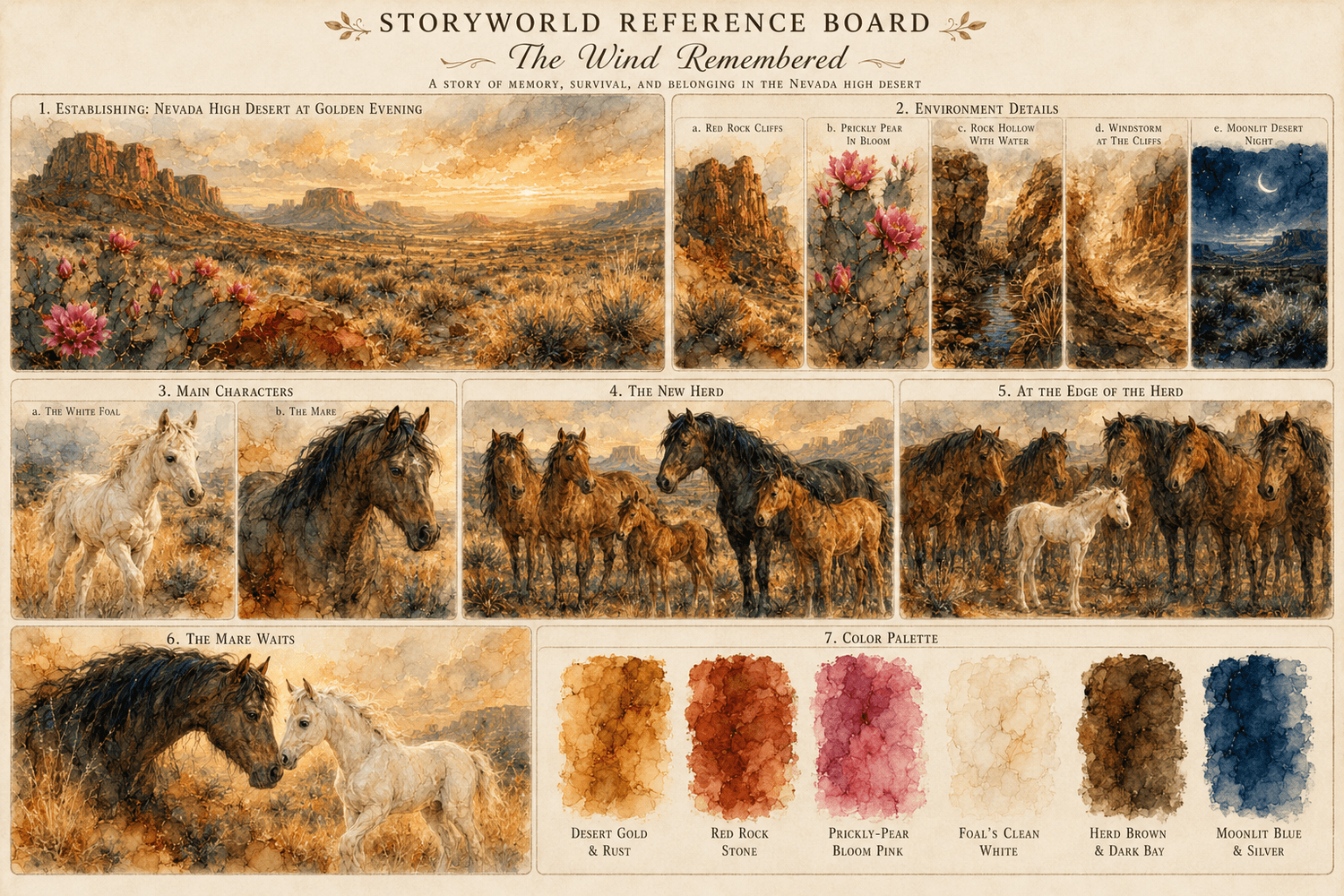
A storyworld begins to feel believable when the visual choices around the story start reinforcing one another instead of feeling like separate decisions.
Place gives the story physical context — whether that is a desert, a kitchen, a city street, a forest, or a world that exists only in imagination.
Light, air, weather, haze, shadow, and time of day help establish how the world feels before anything happens inside it.
A recurring palette can help separate one storyworld from another and reinforce mood, memory, season, or emotional tone.
Landforms, rooms, buildings, roads, thresholds, and structures shape how characters move through the world and how that world is recognized.
Objects, plants, materials, textures, symbols, and small repeated elements can quietly create continuity from one moment to the next.
Scale, framing, texture, realism, stylization, and repeated choices help the viewer understand what belongs inside this particular world.
A storyworld can be quiet, playful, wild, intimate, symbolic, or cinematic. The goal is not to give every story the same look. It is to create a visual language that belongs to that story.
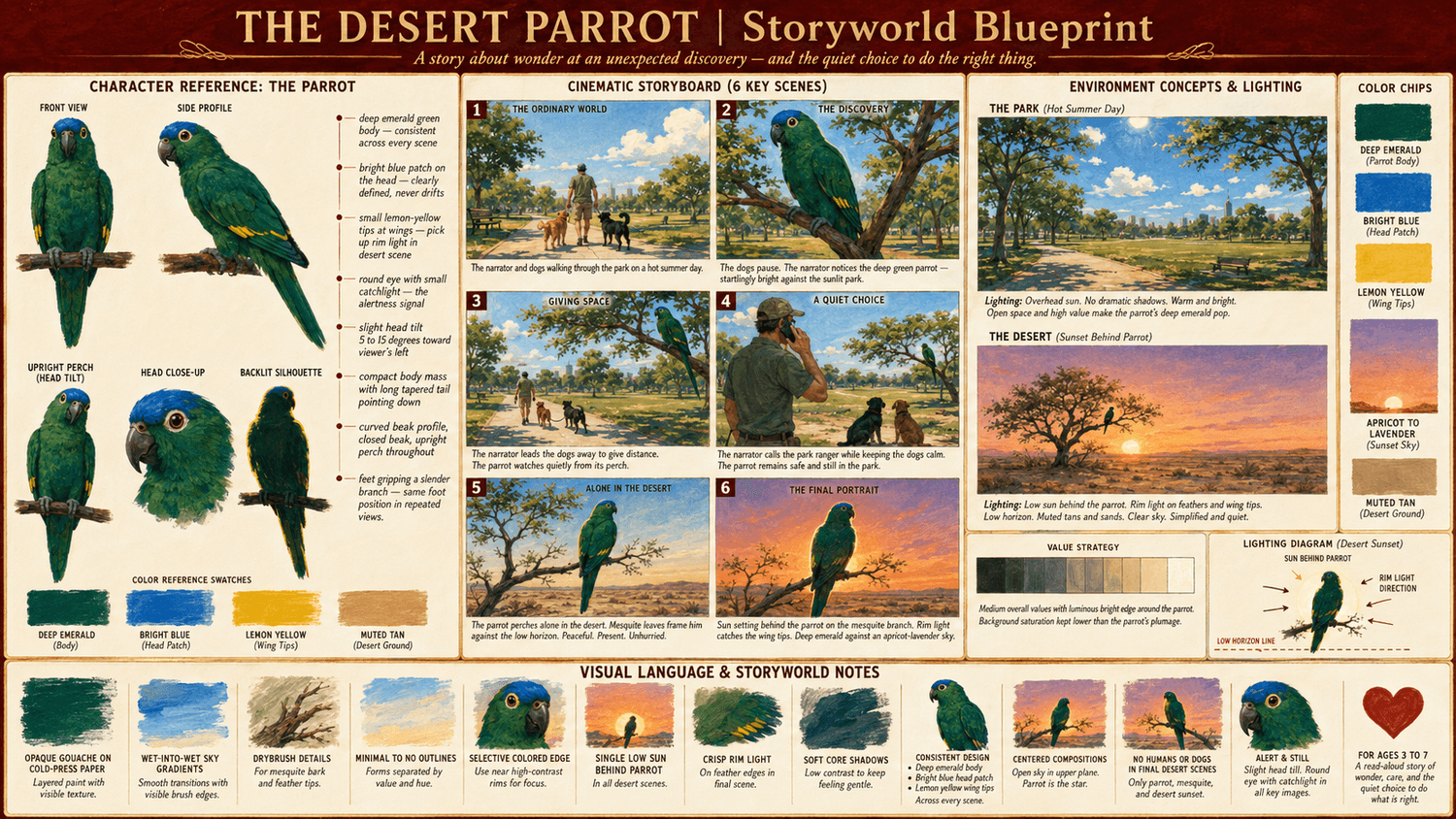
This world connects a bright city park, open desert, a distinctive parrot, and a warm sunset palette. Character details, environment, lighting, and recurring color choices all work together so the world stays recognizable as the story moves from one place to another.
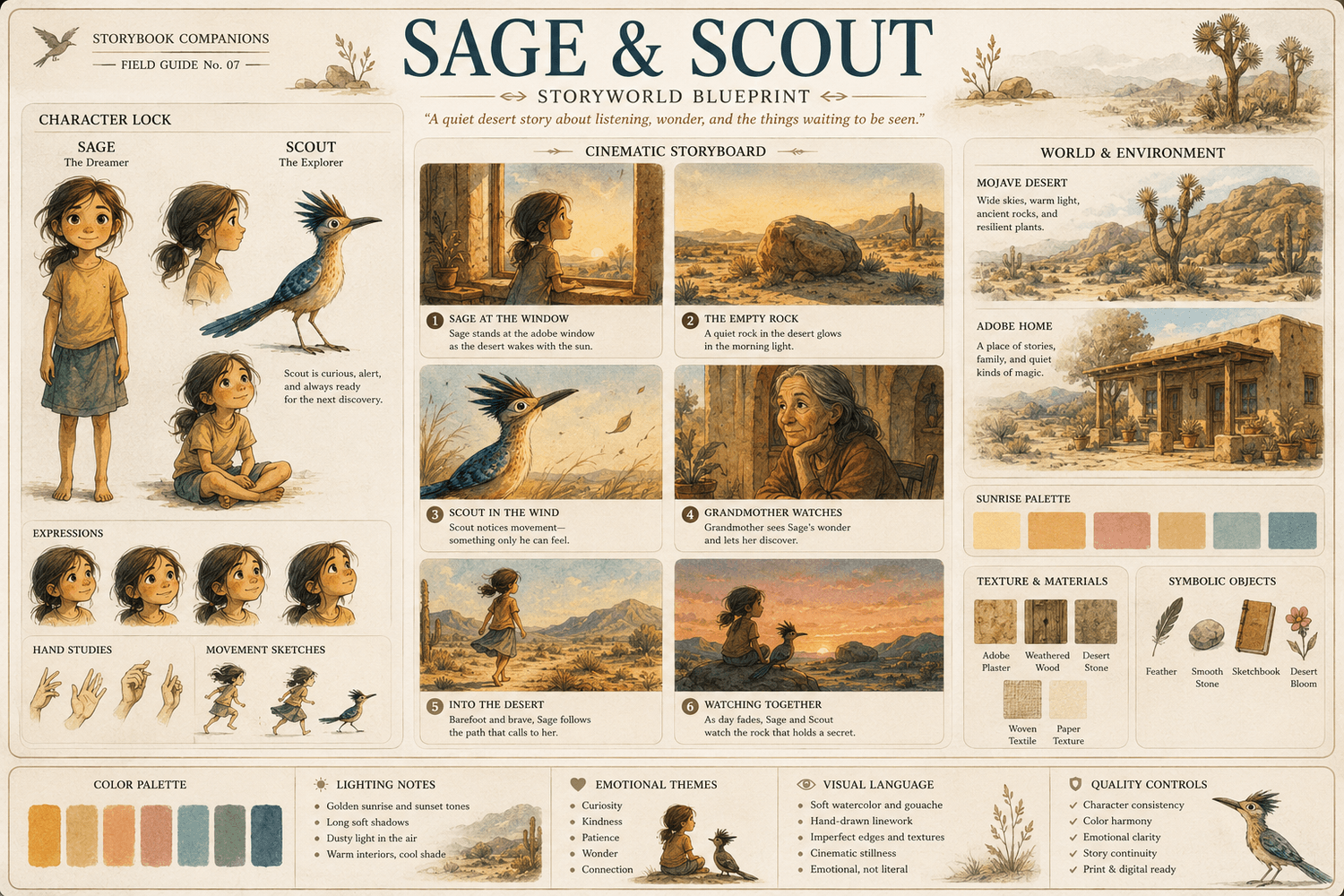
Here, the Mojave Desert, adobe home, desert plants, weathered materials, symbolic objects, and sunrise palette create a world with its own rhythm. The setting is not just background; it helps carry the story’s sense of curiosity, patience, and wonder.
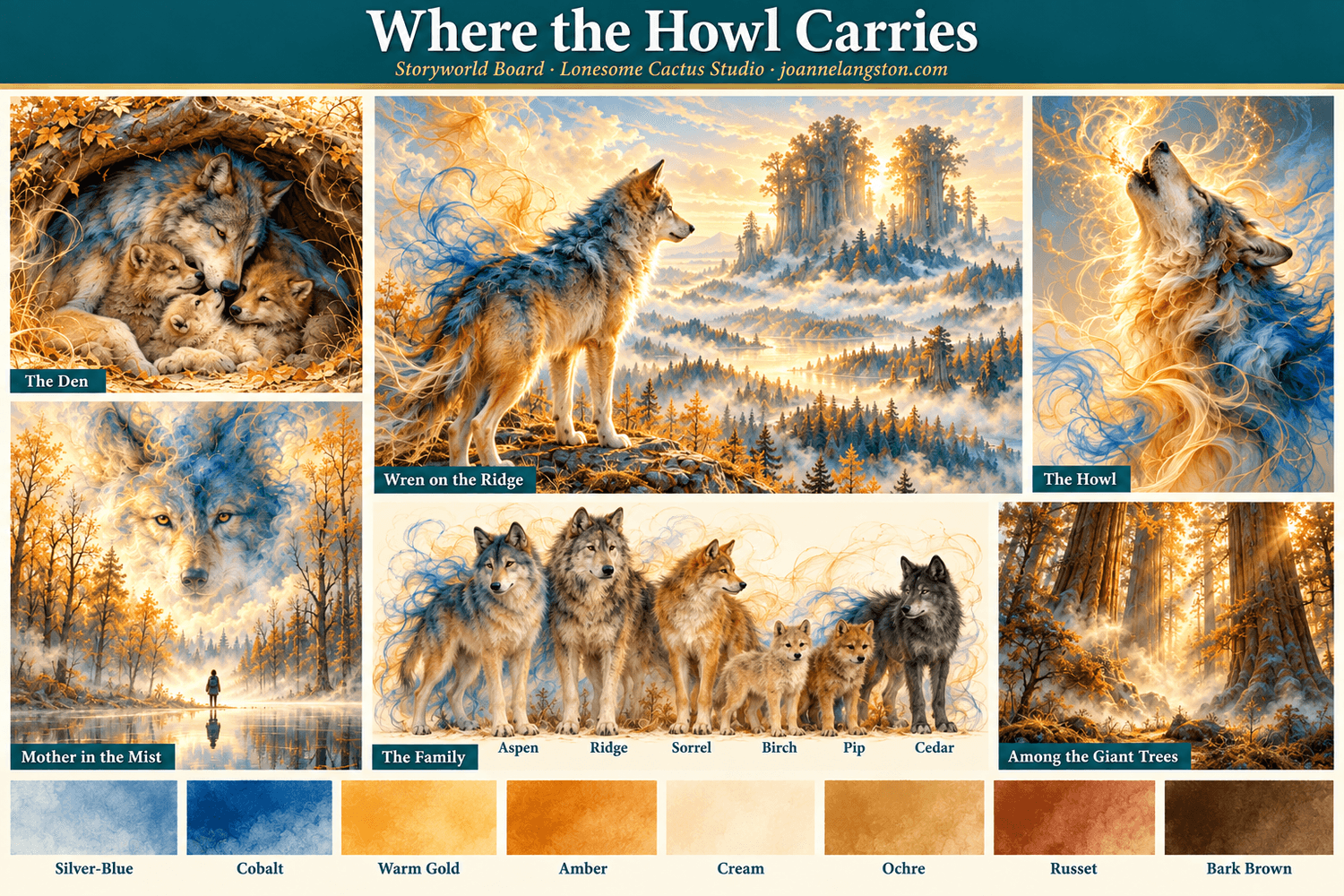
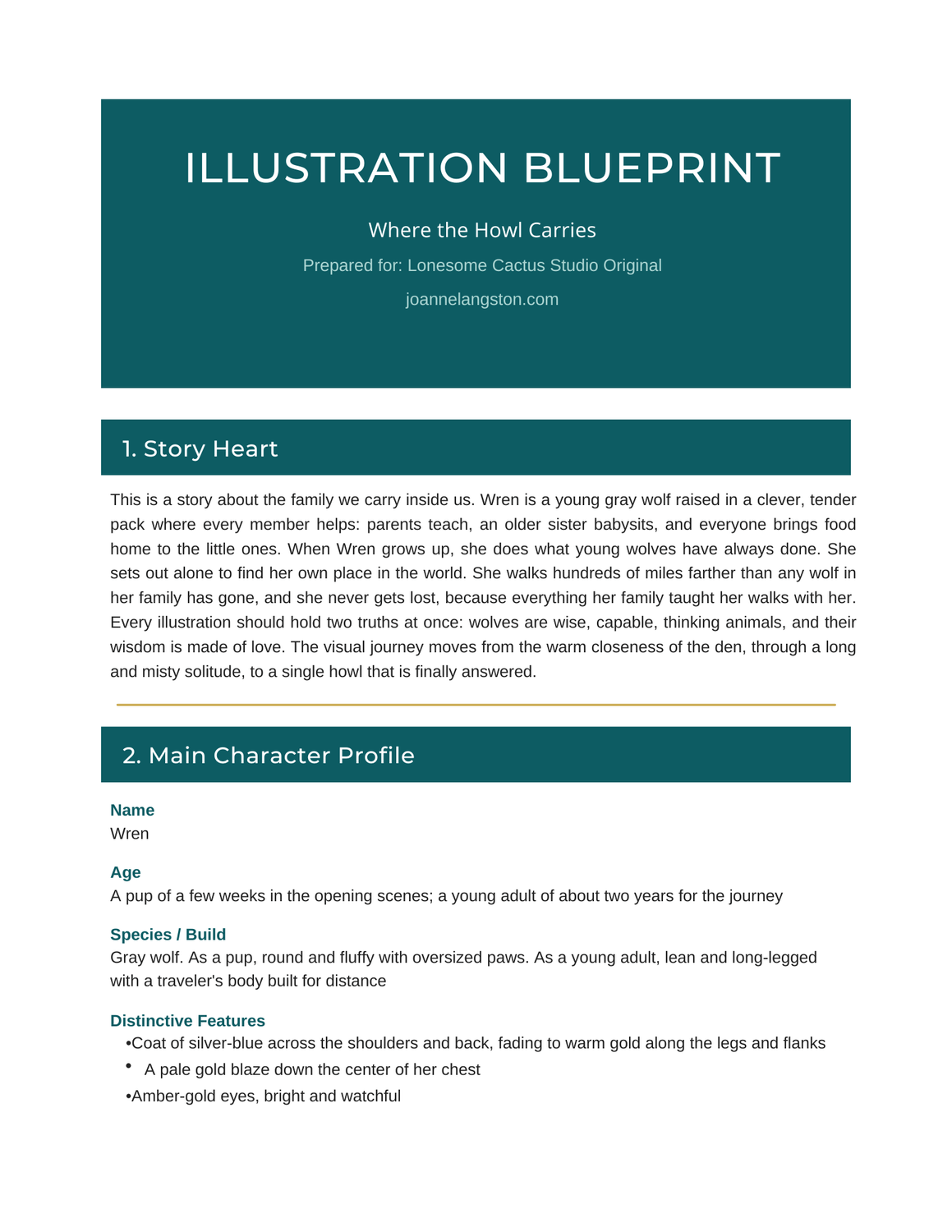
This storyworld uses wolves, mist, giant trees, silver-blue, warm gold, and recurring light to connect family, memory, distance, and belonging. The visual system helps separate present-day scenes from memory while keeping the emotional world coherent.
It is a connected visual system that helps characters, settings, atmosphere, objects, and story moments feel as though they belong to the same place.
You do not need the entire book figured out before visual development can begin.
A meaningful story moment can become the beginning of a working visual-development blueprint based on what you have shared so far. It gives form to the characters, setting, atmosphere, emotional direction, and visual language already emerging from that part of the story.
If the project later grows into a complete book, the full manuscript is needed to identify the complete sequence of spreads and expand that visual direction across the entire story.
Bring the part you already know — a place, a mood, a recurring object, a character, or one meaningful story moment. That is enough to begin developing the world around it.
You do not need a finished manuscript to begin.
Lonesome Cactus Studio
Visual Story Development for Unfinished Stories
Copyright 2026©
Terms & Conditions