Distance
Should we feel close enough to notice a hand, an expression, or a small object — or far enough away to feel isolation, scale, or separation?
A scene can be written and still feel visually unfinished.
Scene visualization helps authors and creators explore how a moment should be seen — not by changing the story, but by clarifying the visual choices that carry its emotion.
Distance, light, point of view, body language, environment, and emotional focus can completely change the way the same story moment feels.
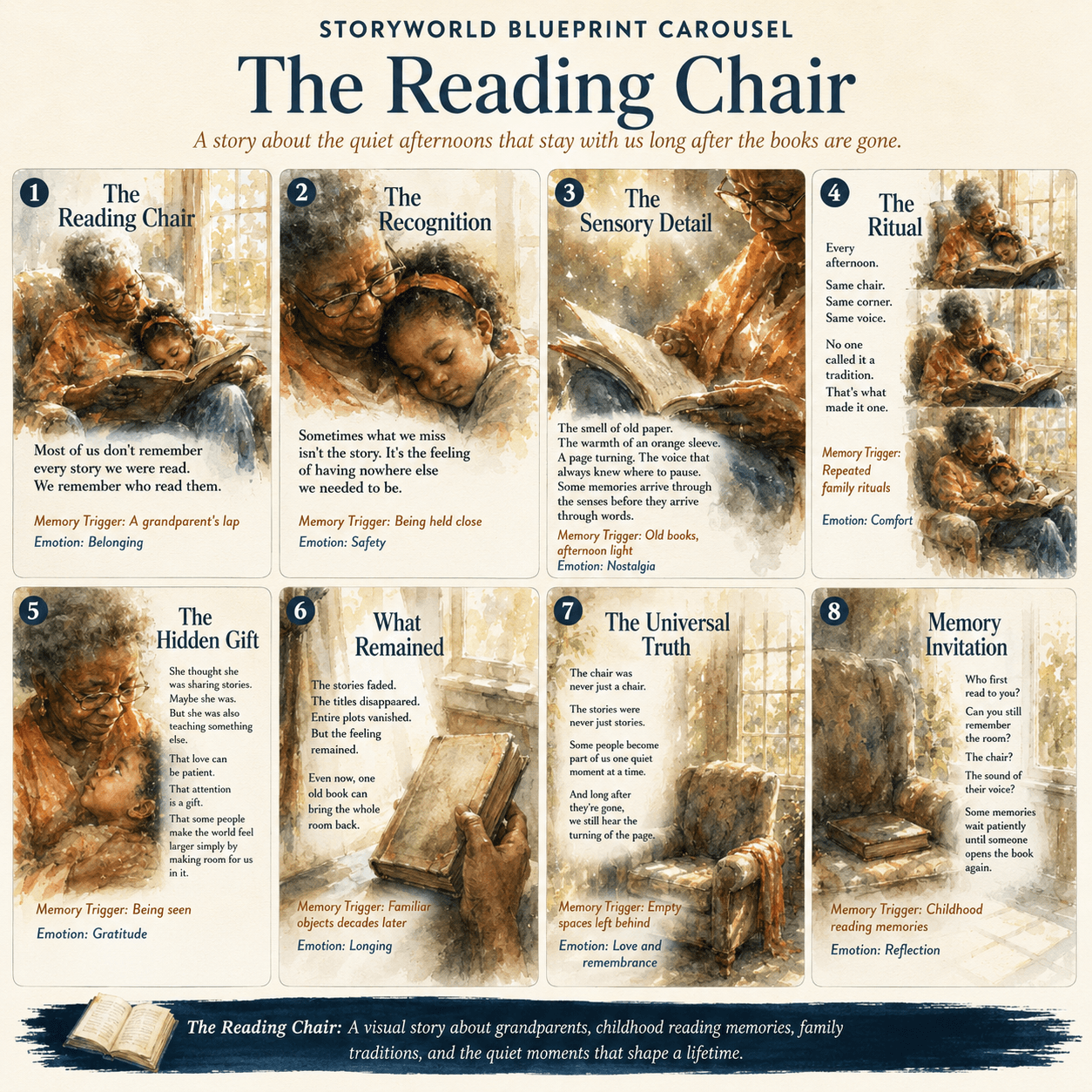
The story event may already be clear. What is often still unresolved is how the reader or viewer should experience that moment visually.
Should we feel close enough to notice a hand, an expression, or a small object — or far enough away to feel isolation, scale, or separation?
Light can make a moment feel safe, exposed, remembered, uncertain, ordinary, or sacred without changing what actually happens.
Where we stand in relation to the scene changes what receives attention and whose experience feels most immediate.
Posture, stillness, movement, gesture, and physical distance between characters can carry emotion before a face ever needs to.
Setting is not only background. Weather, objects, architecture, terrain, texture, and space can reinforce what the moment means.
A scene usually contains many details. Visual direction helps decide what the viewer should feel or notice first.
Scene visualization is not about decorating a moment. It is about identifying which visual choices make the emotion readable — what the viewer notices first, what the environment contributes, and how the moment should feel.

A moment can feel tender, alert, or uncertain depending on gesture, environment, and what else is moving in the frame. Here, the child’s posture, the birds, and the rocky shoreline all contribute to the feeling of discovery.
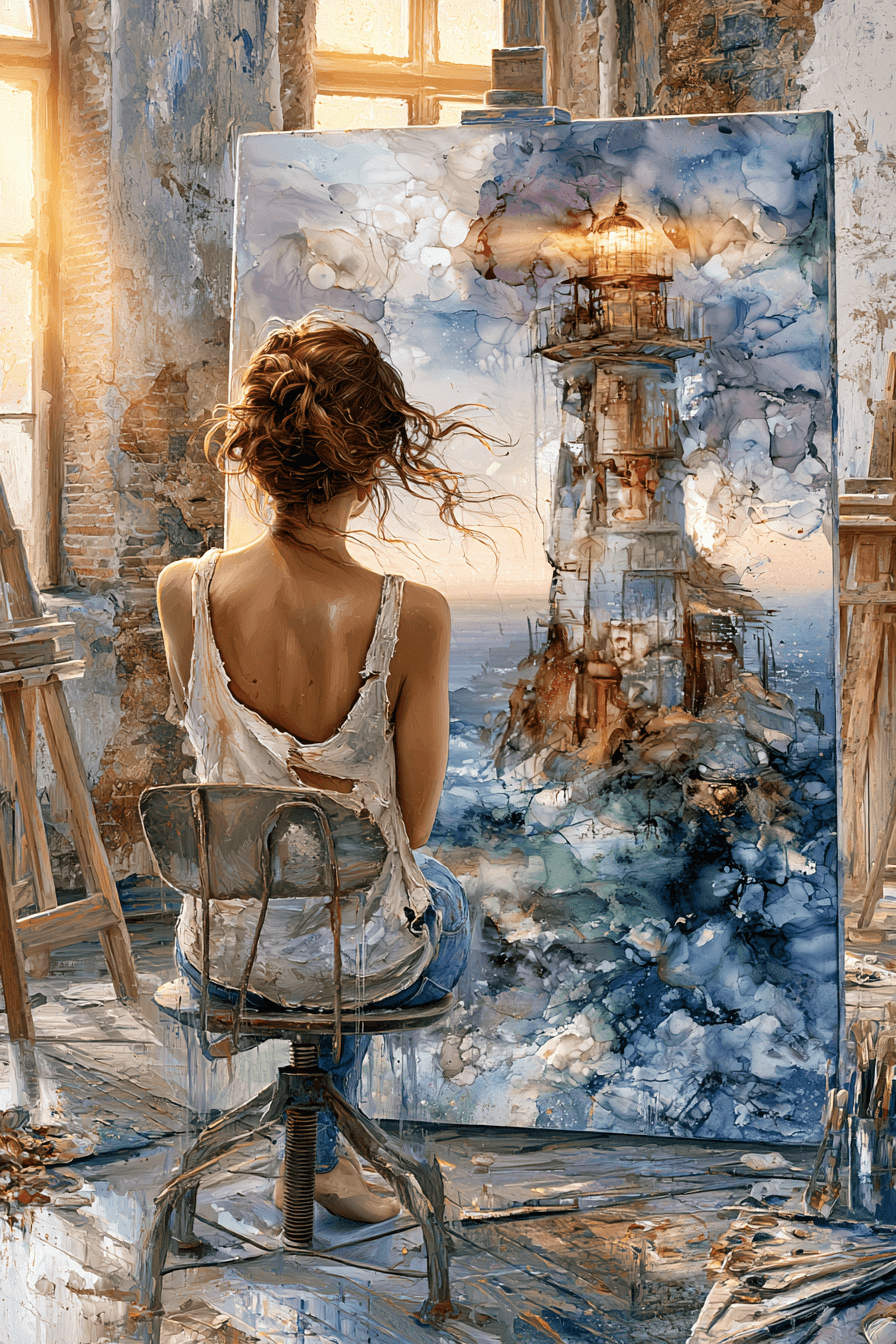
Sometimes the scene is not only about the person, but about what they are looking at, shaping, or trying to understand. Point of view and setting work together here to turn observation into story.

A scene can become emotionally legible through light before a single facial detail is explained. Atmosphere, glow, and visual emphasis help direct the viewer toward the emotional center of the moment.
The point is not to add more detail for its own sake. It is to decide what belongs in the frame, what carries emotion, and what the viewer is meant to feel first.
If you know the feeling, the setting, the gesture, or even one image you cannot stop returning to, that is enough to begin.
You do not need a finished manuscript to begin.
Lonesome Cactus Studio
Visual Story Development for Unfinished Stories
Copyright 2026©
Terms & Conditions